SUBSCRIBE:
Spotify | Apple | Pandora | Google | Stitcher | Tune In | Castbox | RSS

Dr. Judith Orloff is the NY Times bestselling author of The Empath’s Survival Guide, Thriving as an Empath, and Emotional Freedom. Mimi and Dr. Orloff talk about real-life situations that can be challenging for empaths, and how to deal with them in real-time. Topics include aggressive energy coming from other people, relationships, and more. Mimi also pulls a card from Dr. Orloff’s Power of Surrender card deck, which she will post on Instagram under @thedreamdetective.  For more information on Dr. Orloff’s work with empaths, her books, and online course for empaths, visit her website at https://drjudithorloff.com/

November 10th, 2019 by Mimi


SUBSCRIBE: Apple | Google | Stitcher | Spotify | Radio Public | Tune In | RSS

Dave and Mimi talk about what it’s like being an empath, including health, healing, relationships, and managing energy. Dave Markowitz is a medical intuitive, and the best selling author of 3 books on empaths, including his latest book ‘Empathipedia: Healing for Empaths and Highly Sensitive Persons’.

For a full directory of The Dream Detective Podcast episodes, click here.


October 17th, 2018 by Mimi

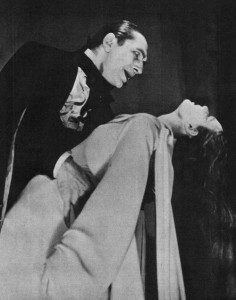
While the goal of a fictional vampire is to harvest blood from their victim, energy vampires (aka emotional vampires) are after our life force. They often start off with flattery, doing nice things for us, or they may shower us with gifts or attention. Then all of a sudden they pull a switch and become controlling, criticizing, or display an over developed sense of attachment. They may even play the ‘victim’ and attempt to get you to rescue them.


The controlling type may do something that seems nice such as offer you a ride to the airport, or make you dinner. But if you refuse they get angry. Getting you to do what they want (controlling you) is how they are ‘fed’ energetically. When you say ‘no’ it upsets them as they don’t get their ‘fix’. Do what you can to resist their suggestions and commands. When you resist enough, they will move on to another host.
The criticizing style will put you down, and aim to inflict emotional and/or psychic pain to you. It’s not necessarily conscious on their part. But unconsciously they know that if they can hurt you, inflict some pain somehow, they can get you to bleed energetically. The life force that leaks out of you when you receive the pain is the ‘blood’ they feed on. If you try to explain to them how they just hurt you, they will put you down for it. Try not to let them hurt you (or don’t show it) as that is how they are fed.
The type of vampire that is emotionally over-attached, or plays victim, will be after you for emotional support. They may try to get you to favors for them or act on their behalf. They may even try to borrow money, or just talk your ear off with their problems, but yet they will not accept any solutions. Their favorite game is ‘yes, but…’ They may try to get your on their side (when there really is no ‘side’ to take) or become jealous. Their main goal is trying to create a feeling of intimacy (though obviously not in a healthy way), as this is how they feed. Avoid rescuing them, and set firm limits with your time and boundaries. For the chronic talker, interrupt them and redirect the conversation.
Sometimes we can be our own worst vampire! Having internalized voices from our past, our own inner critic may take over and harvest our energy, sucking the life out of us internally. Changing our thought patterns and redirecting them to self love is key. Find what lights you up internally and generate as much of that as possible.
Situational vampires can be such things as a job that does not fit your true nature.  Going against your instincts and doing what you think you ‘should’ be doing, rather than what fits who you truly are, can truly drain the life force from a sensitive soul. Follow what literally ‘lights you up’ to generate more chi.
Most energy vampires are not acting consciously. They are wounded souls who have learned that the only way to get any energy is by taking it from others. They need to learn how to get their nurturance from source, their own life; not from you.

SIGNS YOU HAVE BEEN DRAINED BY AN EMOTIONAL VAMPIRE:
•    You feel tired and exhausted after being around them
•    Feeling cheated, resentful, anxious or shut down after being around them
•    Experience the feeling of being ‘slimed’
•    Loss of mental energy
•    Physical strength decreases by as much as 50%
•    Weight gain due to binge eat to relieve stress from being drained by another person. A binge on comfort foods is an attempt to feel better or ‘get your energy back’. Someone has just fed on you, now your instinct is to be fed. But it’s not really food we need, it is protection from the energy sucker.
•    Inability to think clearly
•    Short term memory declines
•    Exposure can take a day or weeks to recover

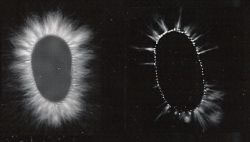
According to the research of Dr. Joe H. Slate, Ph.D., Kirlian (aura) photography shows that during an attack the emotional vampire reaches out to the victim via a tentacle like structure that then punctures and draws energy from the victim’s aura. This expands the vampire’s aura, showing as increased light in the Kirlian photography, and constricts the victim’s aura decreasing their light aka energy. The ‘puncture wounds’ can then take days or weeks to heal. Long term effects of prolonged exposure can cause serious illness in the victim.
Dr. Gillian Holloway echoes a similar sentiment: “Sadist (energy vampire) attacks seem to leave lasting scars, and one of them can be a reduced ability to ‘hold a charge’ as the mystics say. Physical conditioning and breathing meditations can build up your ability to hold your own energy in a powerful way, and to get used to feeling powerful again.” Here are some more tips on how to regain power.

STRATEGIES FOR DEALING WITH EMOTIONAL VAMPIRES:
•    Say no to the favors they offer
•    Do not rescue the
•    Redirect the conversation
•    Breath deeply
•    Resist their suggestions or commands
•    Stay emotionally neutral; they are trying to get you to react as it feeds them
•    Say “I’m sorry, but I can only talk for a few minutes”
•    Say “I hate to interrupt, but…” then interrupt them
•    Say “Thank you for your suggestion, I’ll consider it”. Then do what you want.
•    Move around while they are talking to you
•    Avoid eye contact
•    Do not replay their attacks in your mind
•    Try not to hurt when they attack; it feeds them
•    If you are able, do some physical exercise as it moves energy through the body
•    Set firm limits and boundaries
•    Speak loudly, firm and clear
•    Stay centered and calm

ENERGY WORK:
•    Imagine yourself surrounded by an impenetrable bubble of white light that protects you
•    Talk to them in your mind, for example: “I am in charge of my energy, and you cannot have it.”
•    Imagine their energy in the shape of a ball. Push the ball away from you and send it back to them.
•    Cut the psychic/energetic chords between you
•    When we are drained our energy travels upward (i.e. ‘riled up’ vs. ‘calmed down’). Imagine a bird whose feathers get ruffled, as a metaphor for how this person has riled up your energy. Now imagine the bird’s feathers smoothing down, as your energy calms down and you are able to center and rebalance yourself.

Mimi Pettibone is a Certified Transactional Analysis Practitioner who specializes in dream interpretation, relationships and communication skills. She offers classes and consultations in Seattle, WA and offers private consultations by phone as well. Mimi host bi-monthly telephone dream groups, where members engage in a group process of dream exploration. To join the telephone dream group, go to www.meetup.com/DreamGroup and click ‘join’ to receive calendar updates of upcoming groups and events and to RSVP.

October 17th, 2015 by Mimi

A woman has the following dream:

“I am in an elevator, and it’s going down. A man is in the elevator with me. He is invisible, but I can sense him. He grabs my foot and flips me onto my back. He starts sucking on my toe, and as he does my foot disappears into thin air. He continues to suck, and now my leg gradually disappears. It’s like he is an invisible vampire, sucking my blood, and as my blood disappears, so do I. Although I see this and I am aware of what’s happening, I do not stop him.”

Vampires in dreams can represent people or situations that are sucking the life force right out of us. While the goal of a fictional vampire is to harvest blood from their victim, energy vampires (aka emotional vampires) are seeking our life energy.
In this dream the metaphor of ‘going down’ can hold double meaning both sexually, and it can represent a situation that is ‘going down’ (or going poorly). The actions of the man flipping her on her back, and sucking, could also be interpreted as sexual. At the same time, he is literally sucking her into non-existence! She is disappearing right in front of her own eyes, and he is causing this to happen. Through working with the dream it was confirmed that the man was symbolic of someone who was acting as emotional vampire in her life. This woman was in a very unhealthy sexual relationship with a man who was ‘sucking the life’ out of her. While part of her was aware of this, another part of her chose to continue seeing him and be in the relationship.
In working with this dream, the part that stood out to her the most was the ending where she was aware of what was happening yet she did not stop him. She came to the realization that not only was he draining her energy, but she felt like she was losing herself and her identity in the process  – i.e. she was ‘disappearing’! This was so concerning to the dreamer, and the dream provided such a clear outline, that she chose to end the relationship immediately.
It is common in vampire dreams to experience some kind of ambivalence, such as wanting to help the person, even liking them in some way, but also knowing they are bad for us and wanting to get away from them. This can be reflective of an addictive type of relationship. It is also reflective of how it can feel to be around someone who is an emotional vampire. They can lure us in with flattery, seduction, gifts or a sense of being needed. Then they switch, and go in for the ‘kill”; aka the feeding process of draining someone else’s life force to add to their own.
Some dreams that could show up when dealing with emotional vampires are: dreams of actual vampires, dreams of blood loss, and dreams of losing parts of the body. Emotional wounds often show up as physical wounds to the body in dreams. Someone attacking us emotionally during waking life may show up as someone attacking us physically in the dream state.
Other dreams that could show up when someone is psychically draining or invading a person could be: dreams of a home invasion, losing a purse, being stalked, or someone trying to kill us. I say this with caution as any of these dreams could also be about many other things!  When working with dreams it is always important to check with the dreamer to see what personal meanings and associations they hold, what is going on in their life, and what the symbols and metaphors mean to them. That said, it is not uncommon for nightmares to happen when we re being energetically drained or manipulated by someone. Our dreaming mind will always call attention to the care of the soul that is needed for a healthy life.
While some symbols hold a common meaning, such as vampires being negative creatures who suck the life out of us, they can also vary depending on the dreamer and the dream. Here is an example of another vampire dream, where the vampires actually save the day. The dreamer titled this one ‘Magical Vampires’:

“I am at a big party. The hosts are playing some kind of a game with the guests, unbeknownst to the guests. The game entails the host dancing with a guest, leading them backwards toward a window, pretending to ‘dip’ them, but them purposefully dropping them out the window where they fall to their death.
Now the hosts are doing it with 3 people at a time. I am observing the whole thing in horror. However, the next 3 ‘victims’ are actually magical vampires in disguise! When the hosts go to drop them out the window, the vampires float down the side of the building, only to return flying in the air like some kind of power trio. They are very magical and powerful and it is clear that they are going to use their powers to stop the evil people from killing any more.”

This dream shows the vampires in a role of ‘saving the day’ with their magical powers. Mere humans could not have pulled of such a feat! In this story, the energy the vampires hold is life affirming. Through working with the dream we realized that the vampires represented part of the dreamer that she did not realize existed. She was dealing with some very toxic people, and was finding her own power and ways to respond in the situation that felt so good it was akin to having ‘magical powers’.
I give this dream as an example to never assume, always check with the dreamer. Also look at the story line, plot, actions and feelings. The tones of the two dreams are entirely different, giving the first major clue as to the nature of what is going on with the dreamer.
In the next article we will look at types of energy vampires, and tips for how to deal with them.

Mimi Pettibone is a Certified Transactional Analysis Practitioner who specializes in dream interpretation, relationships and communication skills. She offers classes and consultations in Seattle, WA and offers private consultations by phone as well. Mimi host bi-monthly telephone dream groups, where members engage in a group process of dream exploration. To join the telephone dream group, go to www.meetup.com/DreamGroup and click ‘join’ to receive calendar updates of upcoming groups and events and to RSVP.
Happy dreaming!

October 17th, 2015 by Mimi

This is an article by Dr. Judith Orloff, original post is here:

http://www.drjudithorloff.com/_blog/Dr_Judith_Orloff%27s_Blog/post/why-empaths-are-at-risk-for-adrenal-fatigue/

(Adapted from The Ecstasy of Surrender: 12 Surprising Ways Letting Go Can Empower Your Life Harmony Books, 2014 by Judith Orloff MD)

As a psychiatrist I treat many empath-patients who come in exhausted with a syndrome known as adrenal fatigue. This is a collection of symptoms such as exhaustion, body aches, anxiety, trouble thinking clearly, and insomnia. In this condition, the theory is that the adrenal glands can’t keep up with outside stress so the hormones such as cortisol that normally keep you energized begin to get depleted.


In my book, The Ecstasy of Surrender I discuss the very real situation of empathic illnesses where empaths literally take on the stress and symptoms of others. Unfortunately, conventional medicine doesn’t have a context with which to understand this and many empaths are left in the lurch or misdiagnosed. Because empaths can be emotional sponges and take on the literal symptoms of others, it adds to their stress levels and leaves them more vulnerable to adrenal fatigue. To learn more about Empathic Illnesses including strategies to stop absorbing other people’s toxic energy read the chapter “Harmonizing with Illness & Pain” in my book.


Here are some solutions for empaths to treat adrenal fatigue that can turn your symptoms around and restore your energy. But remember, for empaths this isn’t a one-time fix—it requires some basic life style and diet changes so that you can effectively manage your energy over the long term.


Strategies to Relieve Adrenal Fatigue


  • Get a blood test to measure your cortisol levels.
  • Consider temporary natural cortisol replacement per your physician’s recommendation.
  • Get as much rest as you can on a regular basis (sleep is very healing and restorative!).
  • Eliminate the energy vampires in your life or at least set clear limits and boundaries with them so they don’t chronically sap you. (Read Chapter 5 in the Ecstasy of Surrender for tips and strategies.)
  • Eat a natural whole food diet and avoid junk food
  • Add Himalayan Red Salt to your diet and get rid of low quality salts (always check with your physician if your blood pressure is high).
  • Avoid white flour and other toxic grains
  • Minimize your sugar intake
  • Gentle exercise and stretching—gradually build up stamina and challenge yourself as your energy increases
  • Meditate: Use the three minute surrender to your heart meditation in The Ecstasy of Surrender to take mini breaks throughout your busy day to replenish yourself
  • Take 2,000-5000 mg Vitamins C orally every day
  • Consider IV Vitamin C drips (10-25,000mg) delivered intravenously that can jump start your energy level and support adrenal health (holistic physicians often offer this treatment in their offices). I get one whenever I feel like I’m coming down with a cold to build up my immune system—and it works!
  •  

    In addition to these practical tips, get in the habit of practicing positive thinking. By this I mean, do not beat yourself up with negative thoughts such as “I will never feel better” or “I am weak and sick.” Rather focus on the surrender affirmations I present at the end of every chapter in the book such as “I am healthy, happy, and deserve to have vibrant well-being.” You might not have control over some stresses in your life but you can have control of your attitude. To relieve adrenal fatigue, you can remove a great deal of inner stress by surrendering patterns of self-loathing and embracing self-compassion and self-love!


    Judith Orloff MD is a psychiatrist, intuitive healer, and NY Times bestselling author. Her latest book is The Ecstasy of Surrender: 12 Surprising Ways Letting Go Can Empower Your life. Dr. Orloff’s other bestsellers are Emotional FreedomSecond SightPositive Energy, and Intuitive Healing. Dr. Orloff synthesizes the pearls of traditional medicine with cutting edge knowledge of intuition, energy, and spirituality. She passionately believes that the future of medicine involves integrating all this wisdom to achieve emotional freedom and total wellness.

    April 29th, 2014 by Mimi

    Here is a great article on the trait of high sensitivity, from Psychology Today. Original post here:

    http://www.psychologytoday.com/articles/201107/sense-and-sensitivity
    Sense and Sensitivity
    They tear up at phone commercials. They brood for days over a gentle ribbing. They know what you’re feeling before you do. Their nerve cells are actually hyperreactive. Say hello to the Highly Sensitive Person—you’ve probably already made him cry.
    By Andrea Bartz, published on July 05, 2011 – last reviewed on May 20, 2013
    28
    inShare
    email

    Settling into a chair for coffee with a friend, Jodi Fedor feels her heart begin to pound. Tension creeps through her rib cage. Anger vibrates in her solar plexus. But she’s not upset about anything. The person across from her is. Fedor soaks up others’ moods like a sponge.

    On a walk through her neighborhood in Ottawa, Canada, her attention zeroes in on the one budded leaf that hasn’t unfurled; it brings a lump to her throat. The cawing of a far-off crow galvanizes her attention. An abandoned nest half-hidden amid the treetops fills her with awe.

    Less lovely stimuli can have equally powerful effects. As a child, a casual schoolyard taunt led to “sobbing and histrionics.” Nowadays a small slight can ricochet through her entire body “like I’m actually wounded.”

    Fedor is sensitive—an adjective usually preceded by too. “I’m like an exposed nerve,” she says. “At its worst, my sensitivity turns me into an emotional weather vane at the whim of my environment.” But at its best, it’s a gift, a fine-tuned finger on the pulse of every flutter of her surroundings.

    The Highly Sensitive Person has always been part of the human landscape. There’s evidence that many creative types are highly sensitive, perceiving cultural currents long before they are manifest to the mainstream, able to take in the richness of small things others often miss. Others may be especially sensitive to animals and how they are handled. They’re also the ones whose feelings are so easily bruised that they’re constantly being told to “toughen up.”
    Find a Therapist

    Search for a mental health professional near you.
    Find Local:

    Acupuncturists
    Chiropractors
    Massage Therapists
    Dentists
    and more!

    Today, science is validating a group of people whose sensitivity surfaces in many domains of life. Attuned to subtleties of all kinds, they have a complex inner life and need time to process the constant flow of sensory data that is their inheritance. Some may be particularly prone to the handful of hard-to-pin-down disorders like chronic fatigue syndrome and fibromyalgia. Technology is now providing an especially revealing window into that which likely defines them all—a nervous system set to register stimuli at very low frequency and amplify them internally.

    Image: Lady sleeping on 5 mattresses w/ a
    We all experience shades of sensitivity. Who isn’t rocked by rejection and crushed by criticism? But for HSPs, emotional experience is at such a constant intensity that it shapes their personality and their lives—job performance, social life, intimate relationships—as much as gender and race do. Those who learn to dial down the relentless swooping and cresting of emotions that is the almost invariable accompaniment to extreme sensitivity are able to transform raw perception into keen perceptiveness.

    Dan Nainan, a full-time stand-up comic based in New York, gets tunnel vision after every show: “A thousand people stop by and say they enjoyed it, but one person says something negative and I take it so personally,” he says. “It’s led to some fights and has almost come to physical blows.” He appreciates the irony in hating criticism yet voluntarily getting in front of a packed auditorium every night. “In a regular 9-to-5, no one’s walking up to you and yelling, ‘You’re terrible!’ ”
    The Outside, Amplified

    Highly sensitive people are all around us. They make up about 20 percent of the population, and likely include equal numbers of men and women. All the available evidence suggests they are born and not made.

    You would likely spot them by their most visible feature, their overemotionality. Shari Lynn Rothstein-Kramer, who owns a marketing firm in Miami, Florida, cries almost daily. The sight of a beautiful outfit or exquisite handbag can choke her up. She recently found a note from a neighbor on her windshield that read, “Park in the middle of your space!!” and teared up on the spot. She had to persuade herself not to let it ruin her day.

    The proverbial thin skin of HSPs covers a highly permeable nervous system. Gentle ribbing or an offhand jab can leave them brooding for days. But just as likely, an unexpected compliment or kind exchange can send their mood soaring, while the sight of a dad playing adoringly with his child can bring on tears fueled by a rush of warmth.

    A news segment about a disturbing event—a death, a rape—can upset them deeply. Reading about a recent gang rape, New York actor and writer Jim Dailakis became “overwhelmingly emotional. I couldn’t stop thinking about what that poor woman went through and how it affected her loved ones. I felt sadness mixed with unbelievable rage toward her attackers.” Given their extreme ability to sense and internalize the moods of those around them, the presence of an agitated person, even a stranger with whom they never interact, can make them uneasy.

    HSPs often have a heightened sense of smell or touch and, say, zero tolerance for itchy fabrics or sudden sounds—reflecting their low threshold for sensory input. They complain about things no one else notices; a colleague’s deodorant or a scented candle gives them headaches. And there’s that damn light buzzing in the otherwise quiet office. An hour or two into a party or other sensory-rich event and they’ve withdrawn to a corner, a prelude to announcing they need to go home.

    Image: Man’s silhouette in a sunlit doorway
    Above all, HSPs are defined by their internal experience. “It’s like feeling something with 50 fingers as opposed to 10,” explains Judith Orloff, a psychiatrist and author of Emotional Freedom. “You have more receptors to perceive things.”

    Highly sensitive people are often taken for introverts, and, as with introverts, social interaction depletes them. But in fact they react strongly to everything in their environment. As a result, they need and typically seek extra processing time to sort out their experience. About one in five HSPs are actually extraverts, social sensation seekers who derive pleasure from chatty interactions. But they, too, draw unusually heavily on cognitive horsepower to digest their experiences.

    Rothstein-Kramer considers herself a highly sensitive extravert. “I’d even go with ‘gregarious,'” she says, chuckling. “When people are positive, it inspires me to be more outgoing and energized.” But negative interactions send her spiraling south: “People give me the highest highs and lowest lows.”

    In general, the heavy cognitive demands on all HSPs predispose them to a more reactive than boldly active stance in life. All that sensory input consumes psychic resources for thinking before they take action. Any risks they face are carefully calculated.
    Delicate Subjects

    The notion that there is a whole category of people whose nervous systems overreact to ordinary stimuli grew out of the personal experience of psychologist Elaine Aron. In 1991, she began seeing a psychotherapist for help coping with her intense response to a medical issue. On Aron’s second visit, the therapist nonchalantly suggested that Aron’s outsize reaction to a minor physical problem was “just because you’re highly sensitive.”

    “I had noticed I was different,” she says, “but I didn’t have a way to conceptualize it. The term stuck with me, and I set out to see what we really mean by ‘sensitivity.'” The short answer: nothing like the acute emotional responsiveness she had in mind. An in-depth search of the literature turned up only an occasional reference to chemical or medication sensitivity and vague references to sensitivity as a key dimension of mothering.

    Aron’s search led her to the work of Ernest Hartmann, a psychiatrist at Tufts University best known for his dream research. Around the same time, he was solidifying the concept of boundaries as a dimension of personality and way of experiencing the world. Life, he observes, is made up of boundaries—between past and present, you and me, subject and object. And people differ in the way they embody and perceive boundaries.

    In his schema, people with thin mental boundaries do not clearly separate the contents of consciousness, so that a fantasy life of daydreaming may bump right up against everyday reality. It’s as if those with thin boundaries have porous shells that allow more of their environment to penetrate and “get” to them—and into their dreams. Hartmann’s concept of the thin-boundaried seemed to suggest that there indeed exists a group of people who take in a whole lot more than others.

    Too, Aron saw intimations of highly sensitive people in Jerome Kagan’s now-classic research delineating infant temperament. A Harvard psychologist, Kagan had found that about 10 to 20 percent of infants begin life with a tightly tuned nervous system that makes them easily aroused, jumpy, and distressed in response to novel stimuli. Such highly reactive infants, as he termed them, run the risk of growing into “inhibited” children, who tend to withdraw from experience as a defense and are at high risk for anxiety.

    Kagan says his “high reactives” have only one specific kind of sensitivity—”a sensitivity to events in the environment that imply a new challenge.” And brain imaging studies show that their reactivity reflects a distinctive biological feature: a hyperresponsive amygdala, the brain center that assesses threats and governs the fear response. Unexpected events—from a blizzard to a pop quiz—set off the alarm system embedded in their naturally touchy amygdala, keeping them on the constant lookout for danger.

    Relieved to find indications that there existed people governed by sensitivity, Aron was disappointed that the feature, however defined, was associated only with pathology. As a psychologist, she says, “I decided to start at the ground and see what people who identify with the word think of it.” Thirty “grueling” three-hour interviews later, she was on her way to creating a 27-item questionnaire that is the benchmark for sensitivity. “I have a rich, complex inner life.” Check. “I am made uncomfortable by loud noises.” Check.
    Born to Be Mild

    Advancing neuroscience research suggests that the kind of emotional sensitivity Aron had in mind might be linked to specific variations in gene expression in the nervous system, notably genes related to production of the neurotransmitters serotonin and dopamine.

    Image: Woman crying at the movies
    One gene variation, the short-short allele of the serotonin transporter 5-HTT, has long been associated with a vulnerability to depression and anxiety. Recent data indicate that the very same gene variant brings an array of cognitive benefits—including better, and more profitable, decision-making in gambling situations. Aron suspects the allele may be present in HSPs and could account for their tendency to assess risks thoroughly.

    “It’s hard to imagine this trait enduring in the gene pool if it led only to negative emotions like depression,” Aron says. “The problematic outcomes are just easier to observe than more positive interactions with the environment.”

    Brain imaging studies suggest real differences in the brains of HSPs versus everyone else. Cortical areas linked to attention and processing perceptual data show higher activation in response to all kinds of stimuli. Further, the possibility of reward sparks an outsize response in the reward circuit, and fear-related regions are particularly stirred by threats.

    In his own research on thin-boundaried people, Tufts’ Ernest Hartmann has found a strong link to creativity that Aron believes applies to HSPs as well. Of hundreds of student artists and musicians he has studied, nearly all test positive on his thin-boundaries questionnaire. Many fewer do among those who are able to make a profession of the arts—suggesting that it takes more than practice to make it to Carnegie Hall.

    A 2003 study reported in the Journal of Personality and Social Psychology found that the brains of creative people appear to be far more open to incoming stimuli than those of the noncreative. During a simple task, they experience little latent inhibition—they do not screen out irrelevant data from consciousness and more of their brains are highly activated from moment to moment.

    Their extreme responsiveness to all situations, Aron believes, makes HSPs prone to anxiety and depression in the face of a distressing situation. But it also makes life richer; sights, sounds, flavors, images of beauty are more vivid. It’s as if HSPs alone see the world in high-def.
    A Basis in Biology

    Yet another facet of sensitivity is the focus of independent research by Michael Jawer. A decade ago, Jawer was an investigator for the Environmental Protection Agency looking into reports of sick building syndrome and preparing air-quality guidance for building owners. Why, he wanted to know, did only a handful of people complain about indoor environmental conditions?

    “Some said that in everyday life they’ve been disabled by exposure to colognes, paints, pesticides, trace elements in the air,” he says. “And some went on to tell me they’d been emotionally sensitive for many years. Perhaps the same factors that were disposing certain people to complain about their environment suggested a broader aspect of sensitivity than just the emotional kind.”

    When he surveyed people Aron had identified as HSPs, he found unusual susceptibility to an array of conditions long thought to have a psychosomatic component. Much more than others in the population, they suffered from migraines, irritable bowel syndrome, chronic fatigue syndrome, allergies, and fibromyalgia. Jawer felt the findings point to wide-scale biological differences in HSPs.

    “Take migraines,” he says. “We know they’re triggered by a number of things in the environment—sights, smells, even changes in the weather.” Moods, too, can act as a catalyst: “Strong feelings, even ones people don’t realize they have, can bring migraines on,” says Jawer. He believes HSPs are unusually touchy to both emotional and tangible irritants—to mean-spirited comments as well as pollen or dander in the air.

    Behind it all, says Orloff, is likely a hair-trigger flight-or-fight response. A lower threshold of activation of stress hormones would leave the body flooded with cortisol and adrenaline. Chronically elevated stress hormones are linked with a host of health problems, from heart disease to decreased bone density to impaired memory.

    To Aron, the evidence adds up to a distinctive personality type. The HSP’s touchy nervous system leads to a touchy temperament. Like the princess sensing the pea below her tower of mattresses, HSPs perceive the slightest sensory or emotional provocation, then respond with a flurry of brain activity that begets an outsize reaction—rumination, tears, histrionics, on one hand, or unbridled enthusiasm on the other. Their personalities may run the gamut from moody to dramatic—all the product of their unique biology.
    Image: Hand with a bleeding cut from a bird feather
    Missing Men?

    In crafting her questionnaire, Aron was determined to include only those questions men and women answered in equal proportions and calibrated it so that 20 percent of males and females registered as highly sensitive. But once she started administering the test to the general population, far fewer than 20 percent of males came up HSP-positive. Where did the guys go—or were they never there to begin with?

    Aron insists that males and females are born highly sensitive in equal numbers—but some men grow up actively hiding it. “They don’t want to identify as sensitive.”

    Kagan’s “reactives,” too, were male and female in equal measure—at 4 months of age. But “the male peer group is very harsh with shy, timid boys,” he explains, and by young adulthood, the highly reactive males were very difficult to pick out from the non-reactive population.

    The neural basis of sensitivity appears no different in men and women. But the resulting behaviors—tearing up in joy, getting upset by a ribbing, feeling overwhelmed at a concert or sporting event—may violate even contemporary Western standards of masculinity. HSP males may look effeminate to potential mates. (No, there’s no evidence that HSP males are disproportionately homosexual.)

    “In North America, in particular, we expect boys to be tough and to be risk-takers,” says Ted Zeff, a San Francisco psychologist whose in-depth interviews with more than 30 highly sensitive men in five countries resulted in a book, The Strong, Sensitive Boy. “Boys are told to hide all emotions other than anger. This is especially hard on sensitive boys, who have to repress their natural tendencies.”

    New York’s Jim Dailakis admits “I definitely hide my sensitivity from certain people. Wearing your heart completely on your sleeve leaves you open to ridicule.”
    Double-Edged Effects

    Internalized by a highly sensitive child, ridicule can snowball into depression. Likewise, a “Nice job!” atop a book report might not seem like a game-changer, but to a sensitive child a little encouragement can have outsize effects, motivating a child to reproduce that behavior—say, by studying well for the next test. School and parenting practices can dramatically shape the development of highly sensitive children, who can thrive spectacularly in a mildly encouraging classroom or struggle endlessly in a slightly discouraging one, while a non-sensitive child would wind up about the same regardless of slight variations in the environment.

    The possibility of opposite outcomes—downward spiral or rocketing success—underscores the double-edged nature of sensitivity. Neither flaw nor gift, it is, rather, an amplifier of an environment’s effects. Sensitive people who happened to have troubled childhoods may wind up with high rates of anxiety and depression, but HSPs who were loved and encouraged as children can grow into well-adjusted adults.
    “You Won’t Make Me Sound Crazy, Will You?”

    Fedor and Rothstein-Kramer both ask the same question, out of the blue, mid-interview. Connoisseurs of small slights, study partners who cannot focus with that stupid jackhammer roaring outside, HSPs are subject to a constant influx of criticism exhorting them to toughen up or to grow cojones. That message—that they’re somehow unacceptable as they are—resonates with intensity.

    Aron would like to see HSPs focus more on what they have to offer. They make compassionate friends who truly care about others; they channel beauty from the world into art and music; they notice things others miss. Ensconced in safe environments and steeled against the negativity of others, they can flourish.

    HSPs inhabit a teeming world of vibrant colors, sharp smells, striking sounds, and powerful tugs at their emotions. “I am, and I always will be, extremely aware of my environment and the people within it,” Fedor says. As CEO of a successful beauty company, she surrounds herself with supportive people. “I tried toughening up, rooting myself in taxing situations,” she says. “Then I realized I was spending my time coping instead of thriving. Now I know that I can choose to respond or to let something go.” For her, it’s a purer way of savoring this piquant world. —Andrea Bartz
    Tips for the Touchy

    Highly sensitive? “You’ve probably gone through life assuming you’re like the other 80 percent of people,” Aron says. “The truth is, you need a whole different instruction manual.” Here are a few adjustments you can make to sync your life with your mode of sensory processing.

    Designate downtime. Your brain works overtime processing input and soaking up others’ moods, so it needs a chance to recover. “Limit stimulation when you can,” Aron suggests. “Turn the radio off when you’re driving. Use a sleep mask and earplugs at night.” Meditation is also a powerful way to tamp down stress hormones. Orloff prescribes quick, three-minute meditations during the day: Sit quietly, put your hand over your heart, deepen your breathing, and focus on something beautiful—a picture of your child.
    Talk yourself calm. Sensitive people aren’t doomed to spend life reeling from rejection. It’s possible to rein in a response before it spirals down to depression. Fedor carries a checklist in her wallet and runs through it when she feels under attack: “Is this about me? What is the intent of the other person? Am I reacting because this brings out fear in me?” Similarly, Rothstein-Kramer asks herself, “How can I interpret this situation in a different way?” “Practice controlling your reactions,” she says; “eventually a little dig won’t throw you.”
    Change your interactions. Kindly but firmly cut off energy drains. Say your friend is midway through her umpteenth rant about her job. “You have to lovingly but matter-of-factly say, ‘I see you’re going through something; when you want to get into solutions, I’m here for you, but right now this is hard for me to listen to,'” Orloff explains. “Tone of voice is everything.”
    Arm yourself. Sometimes, you’ll be forced into a situation that sucks you dry—a conference you must endure for work, a business lunch with an insufferable kvetch. Protect yourself: “Visualize a shield around your body, keeping negative input out,” Orloff says.
    Rewrite history. Think back to the decisions you’ve regretted and the things you dislike about yourself: “Very often, they have to do with sensitivity,” Aron points out. The surprise party where you wound up crying in your room and the promotion you turned down because it involved too much pressure make much more sense through the lens of your sensitivity. Acknowledge this.

    Dealing with Delicate People

    Since 20 percent of the population is highly sensitive, “you’re probably working with or are even friends with one—you just didn’t realize it,” Aron says. Now that you know the hallmarks of this personality, adjust your behavior to make your interactions smoother.

    Skip the tips. HSPs are mighty sick of hearing, “You really shouldn’t let it get to you” from well-meaning friends. They experience it as a put-down, a suggestion that they’ve done something wrong. Say something more reassuring—such as, that whatever situation is causing them stress will improve shortly.
    Modify your view. In a close relationship, you may discover you’ve been making wrong assumptions about your partner. You may hear things like “I never liked going to those sporting events or concerts,” Aron warns. Forgo the temptation to respond with grief or anger. Just accept it.
    Respect their space. A common mistake HSPs’ loved ones make: hovering. “They promise their partner an hour of recharge time,” Orloff says, “and then they hang around waiting for you to come out.” Better to tell them, “Fine, go replenish, I’ll be out mowing the lawn”—and do it.


    April 19th, 2014 by Mimi

    Did you know that the heart has an electromagnetic field that can be measured outside of the body?

    The Institute of HeartMath is doing some amazing research, and now they have this beautiful video as well (below).  The video illustrates how the electromagnetic field of the heart operates not only within us (in communication with our brain) but how it also extends to our connections and relationships with other people.  When we say we can feel someone’s energy (whether positive or negative), this is no longer a woo-woo-way-out concept.  It is now scientifically documented that the heart generates the largest electromagnetic field in the body, and that it extends beyond the physical body. If we can feel the electric shock of a little spark of static electricity, of course we can also feel the electrical field of another human being.  Some of us are more sensitive to this subtle field, empathic people are especially tuned in to it.  It can be a gift in understanding fellow human beings, and it is also important for empaths and highly sensitive people to learn how to not get overwhelmed by the fields of others.  One way of doing this is learning how to turn up your OWN electromagnetic field, and increase your own heart coherence. When we do this, we are less affected by the energy of others, while still holding the ability (even more so) to tune in and connect with them.

    The Institute of HeartMath emphasizes the importance of heart-brain communication and coherence.  When our head and our heart are operating in synch, our electromagnetic field is more coherent, and our heart beat is actually more rhythmically consistent.  This contributes to increased health, and if you are into the Law of Attraction, this is how you influence and interact with the Quantum Field to manifest your desires and create positive relationships.

    From the paper ‘The Energetic Heart’ (www.heartmath.org) “…a subtle yet influential energetic system operates just below our conscious level of awareness….this energetic system contributes to the ‘magnetic’ attractions or repulsions that occur between individuals.”  Yes, apparently attraction really is magnetic!  If someone has what we call a ‘magnetic’ personality, it seems that from this scientific perspective they might likely have a very strong electromagnetic field.

    It used to be believed that emotions originated in the brain.  Now it is recognized that emotions are a result of  brain-body communication. So how do you get the head and the heart to work together?  One of my specialties in working with private clients is something known as parts therapy. If you’ve ever said ‘part of me wants to buy that car, but part of me wants to save the money’, or ‘part of me wants to loose weight, but part of me wants to eat that cake!’, you are aware (consciously or unconsciously) that we all have ‘parts’ within us.  When these parts are not in agreement we experience the feeling of inner conflict, which  translates energetically and electromagnetically to the heart-brain communication system operating at less than optimal coherence (coherence is the goal).  One of my favorite ways to facilitate a client session is to do parts therapy with the head and the heart. I also add the gut into the equation. That will be another article, as science is now also finding that the gut has it’s own nervous system and intelligence, and is the only organ in the body that can operate independently of the brain. Intuitively we’ve always known this, again I defer to linguistics (one of my other favorite topics!), as how many times do we use expressions like “I had a gut feeling” or “he felt sick to his stomach about it” or  “she had butterflies in her stomach”.   If you would like to book a head-heart-gut session to increase internal coherence, resolve inner conflict, and/or help in decision making, please contact me.

    In the mean time I hope you enjoy this video. It shows a visual representation of how I have seen and felt the world since I was a small child. Finally it’s ok to talk about this stuff!

    ~Mimi

    Screenshot

    http://youtu.be/QdneZ4fIIHE

    The Institute of HeartMath offers many interesting books and papers on their research. For more information visit: http://www.heartmath.org

    May 30th, 2013 by Mimi

    Written by Dr. Judith Orloff, Author of ‘Emotional Freedom: Liberate Yourself from Negative Emotions and Transform Your Life’

    Relationship Secrets for Highly Empathic People

    Loneliness gets to some more than others. But why it hangs on isn’t always apparent when read by traditional medical eyes. In my psychiatric practice in Los Angeles and in my workshops I’ve been struck by how many sensitive, empathic people who I call “emotional empaths” come to me, lonely, wanting a romantic partner, yet remaining single for years. Or else they’re in relationships but feel constantly fatigued and overwhelmed. The reason isn’t simply that “there aren’t enough emotionally available people ‘out there,'” nor is their burnout “neurotic.” Personally and professionally, I’ve discovered that something more is going on.

    In “Emotional Freedom” I describe emotional empaths as a species unto themselves. Whereas others may thrive on the togetherness of being a couple, for empaths like me, too much togetherness can be difficult, may cause us to bolt. Why? We tend to intuit and absorb our partner’s energy, and become overloaded, anxious, or exhausted when we don’t have time to decompress in our own space. We’re super-responders; our sensory experience of relationship is the equivalent of feeling objects with 50 fingers instead of five. Energetically sensitive people unknowingly avoid romantic partnership because deep down they’re afraid of getting engulfed. Or else, they feel engulfed when coupled, a nerve-wracking, constrictive way to live. If this isn’t understood, empaths can stay perpetually lonely. We want companionship, but, paradoxically, it doesn’t feel safe. One empath patient told me, “It helps explain why at 32 I’ve only had two serious relationships, each lasting less than a year.” Once we empaths learn to set boundaries and negotiate our energetic preferences, intimacy becomes possible.

    For emotional empaths to be at ease in a relationship, the traditional paradigm for coupling must be redefined. Most of all, this means asserting your personal space needs — the physical and time limits you set with someone so you don’t feel they’re on top of you. Empaths can’t fully experience emotional freedom with another until they do this. Your space needs can vary with your situation, upbringing, and culture. My ideal distance to keep in public is at least an arm’s length. In doctors’ waiting rooms I’ll pile my purse and folders on the seats beside me to keep others away.

    With friends it’s about half that. With a mate it’s variable. Sometimes it’s rapture being wrapped in his arms; later I may need to be in a room of my own, shut away. One boyfriend who truly grasped the concept got me a “Keep Out” sign for my study door! For me, this was a sign of true love. All of us have an invisible energetic border that sets a comfort level. Identifying and communicating yours will prevent you from being bled dry by others. Then intimacy can flourish, even if you’ve felt suffocated before. Prospective mates or family members may seem like emotional vampires when you don’t know how to broach the issue of personal space. You may need to educate others — make clear that this isn’t about not loving them — but get the discussion going. Once you can, you’re able to build progressive relationships.

    If you’re an empath or if the ordinary expectations of coupledom don’t jibe with you practice the following tips.

    Define your personal space needs

    Tip 1. What to say to a potential mate

    As you’re getting to know someone, share that you’re a sensitive person, that you periodically need quiet time. The right partner will be understanding; the wrong person will put you down for being “overly sensitive,” and won’t respect your need.

    Tip 2. Clarify your preferred sleep style

    Traditionally, partners sleep in the same bed. However, some empaths never get used to this, no matter how caring a mate. Nothing personal; they just like their own sleep space. Speak up about your preferences. Feeling trapped in bed with someone, not getting a good night’s rest, is torture. Energy fields blend during sleep, which can overstimulate empaths. So, discuss options with your mate. Separate beds. Separate rooms. Sleeping together a few nights a week. Because non-empaths may feel lonely sleeping alone, make compromises when possible.

    Tip 3. Negotiate your square footage needs

    You may be thrilled about your beloved until you live together. Experiment with creative living conditions so your home isn’t a prison. Breathing room is mandatory. Ask yourself, “What space arrangements are optimal?” Having an area to retreat to, even if it’s a closet? A room divider? Separate bathrooms? Separate houses? I prefer having my own bedroom/office to retreat to. I also can see the beauty of separate wings or adjacent houses if affordable. Here’s why: conversations, scents, coughing, movement can feel intrusive. Even if my partner’s vibes are sublime, sometimes I’d rather not sense them even if they’re only hovering near me. I’m not just being finicky; it’s about maintaining well-being if I live with someone.

    Tip 4. Travel wisely

    Traveling with someone, you may want to have separate space too. Whether my companion is romantic or not, I’ll always have adjoining rooms with my own bathroom. If sharing a room is the only option, hanging a sheet as a room divider will help. “Out of sight” may make the heart grow fonder.

    Tip 5. Take regular mini-breaks

    Empaths require private downtime to regroup. Even a brief escape prevents emotional overload. Retreat for five minutes into the bathroom with the door shut. Take a stroll around the block. Read in a separate room. One patient told her boyfriend, “I need to disappear into a quiet room for ten minutes at a party, even if I’m having fun,” a form of self-care that he supports.

    In my medical practice, I’ve seen this creative approach to relationships save marriages and make ongoing intimacies feel safe, even for emotional empaths (of all ages) who’ve been lonely and haven’t had a long-term partner before. Once you’re able to articulate your needs, emotional freedom in your relationships is possible.

    June 24th, 2012 by Mimi

    Here is Part 2 of Christel Broederlow’s article on Empaths:

    Empaths are often poets in motion. They are the born writers, singers, and artists with a high degree of creativity and imagination. They are known for many talents as their interests are varied, broad and continual, loving, loyal and humorous. They often have interests in many cultures and view them with a broad-minded perspective. They are mother, father, child, friend, nurse, caregiver, teacher, doctor, sales people… to psychic, clairvoyant, healer, etc. (That is not to say that any of these categories are all empaths.) The list is extensive and really unimportant. It is more important to notice that empaths are everywhere–in every culture and throughout the world.

    Empaths Are Good Listeners

    Empaths are often very affectionate in personality and expression, great listeners and counselors (and not just in the professional area). They will find themselves helping others and often putting their own needs aside to do so. In the same breath, they can be much the opposite. They may be quiet, withdrawn from the outside world, loners, depressed, neurotic, life’s daydreamers, or even narcissistic.

    They are most often passionate towards nature and respect its bountiful beauty. One will often find empaths enjoying the outdoors, beaches, walking, etc. Empaths may find themselves continually drawn to nature as a form of release. It is the opportune place to recapture their senses and gain a sense of peace in the hectic lives they may live. The time to get away from it all and unwind with nature becomes essential to the empath. Animals are often dear to the heart of empaths, not as a power object, but as a natural love. It is not uncommon for empaths to have more than one pet in their homes.

    Traits of an Empath

    Empaths are often quiet and can take a while to handle a compliment for they’re more inclined to point out another’s positive attributes. They are highly expressive in all areas of emotional connection, and talk openly, and, at times, quite frankly in respect to themselves. They may have few problems talking about their feelings.

    However, they can be the exact opposite: reclusive and apparently unresponsive at the best of times. They may even appear ignorant. Some are very good at blocking out others and that’s not always a bad thing, at least for the learning empath struggling with a barrage of emotions from others, as well as their own feelings.

    Empaths have a tendency to openly feel what is outside of them more so than what is inside of them. This can cause empaths to ignore their own needs. In general an empath is non-violent, non-aggressive and leans more towards being the peacemaker. Any area filled with disharmony creates an uncomfortable feeling in an empath. If they find themselves in the middle of a confrontation, they will endeavor to settle the situation as quickly as possible, if not avoid it all together. If any harsh words are expressed in defending themselves, they will likely resent their lack of self-control, and have a preference to peacefully resolve the problem quickly.

    Empaths are sensitive to TV, videos, movies, news and broadcasts. Violence or emotional dramas depicting shocking scenes of physical or emotional pain inflicted on adults, children or animals can bring an empath easily to tears. At times, they may feel physically ill or choke back the tears. Some empaths will struggle to comprehend any such cruelty, and will have grave difficulty in expressing themselves in the face of another’s ignorance, closed-mindedness and obvious lack of compassion. They simply cannot justify the suffering they feel and see.

    People of all walks of life and animals are attracted to the warmth and genuine compassion of empaths. Regardless of whether others are aware of one being empathic, people are drawn to them as a metal object is to a magnet! They are like beacons of light.

    Even complete strangers find it easy to talk to empaths about the most personal things, and before they know it, they have poured out their hearts and souls without intending to do so consciously. It is as though on a sub-conscious level that person knows instinctively that empaths would listen with compassionate understanding.

    Here are the listeners of life. Empaths are often problem solvers, thinkers, and studiers of many things. As far as empaths are concerned, where a problem is, so too is the answer. They often will search until they find one–if only for peace of mind.

    Written by Christel Broederlow Copyright (c) 2002 Christel Broederlow Shortened Version from The Empath Report 101

    About this contributor: Christel Broederlow is a natural born empath and author of numerous articles about empathy through personal experience and continual research. Her Web site, The Empath Report, previously hosted at Geocities is no longer active.

    June 24th, 2012 by Mimi

    Here is part two of the article by Christel Broederlow:

    Empaths are often poets in motion. They are the born writers, singers, and artists with a high degree of creativity and imagination. They are known for many talents as their interests are varied, broad and continual, loving, loyal and humorous. They often have interests in many cultures and view them with a broad-minded perspective. They are mother, father, child, friend, nurse, caregiver, teacher, doctor, sales people… to psychic, clairvoyant, healer, etc. (That is not to say that any of these categories are all empaths.) The list is extensive and really unimportant. It is more important to notice that empaths are everywhere–in every culture and throughout the world.
    Empaths Are Good Listeners
    Empaths are often very affectionate in personality and expression, great listeners and counselors (and not just in the professional area). They will find themselves helping others and often putting their own needs aside to do so. In the same breath, they can be much the opposite. They may be quiet, withdrawn from the outside world, loners, depressed, neurotic, life’s daydreamers, or even narcissistic.

    They are most often passionate towards nature and respect its bountiful beauty. One will often find empaths enjoying the outdoors, beaches, walking, etc. Empaths may find themselves continually drawn to nature as a form of release. It is the opportune place to recapture their senses and gain a sense of peace in the hectic lives they may live. The time to get away from it all and unwind with nature becomes essential to the empath. Animals are often dear to the heart of empaths, not as a power object, but as a natural love. It is not uncommon for empaths to have more than one pet in their homes.
    Traits of an Empath
    Empaths are often quiet and can take a while to handle a compliment for they’re more inclined to point out another’s positive attributes. They are highly expressive in all areas of emotional connection, and talk openly, and, at times, quite frankly in respect to themselves. They may have few problems talking about their feelings.

    However, they can be the exact opposite: reclusive and apparently unresponsive at the best of times. They may even appear ignorant. Some are very good at blocking out others and that’s not always a bad thing, at least for the learning empath struggling with a barrage of emotions from others, as well as their own feelings.

    Empaths have a tendency to openly feel what is outside of them more so than what is inside of them. This can cause empaths to ignore their own needs. In general an empath is non-violent, non-aggressive and leans more towards being the peacemaker. Any area filled with disharmony creates an uncomfortable feeling in an empath. If they find themselves in the middle of a confrontation, they will endeavor to settle the situation as quickly as possible, if not avoid it all together. If any harsh words are expressed in defending themselves, they will likely resent their lack of self-control, and have a preference to peacefully resolve the problem quickly.

    Empaths are sensitive to TV, videos, movies, news and broadcasts. Violence or emotional dramas depicting shocking scenes of physical or emotional pain inflicted on adults, children or animals can bring an empath easily to tears. At times, they may feel physically ill or choke back the tears. Some empaths will struggle to comprehend any such cruelty, and will have grave difficulty in expressing themselves in the face of another’s ignorance, closed-mindedness and obvious lack of compassion. They simply cannot justify the suffering they feel and see.

    People of all walks of life and animals are attracted to the warmth and genuine compassion of empaths. Regardless of whether others are aware of one being empathic, people are drawn to them as a metal object is to a magnet! They are like beacons of light.

    Even complete strangers find it easy to talk to empaths about the most personal things, and before they know it, they have poured out their hearts and souls without intending to do so consciously. It is as though on a sub-conscious level that person knows instinctively that empaths would listen with compassionate understanding.

    Here are the listeners of life. Empaths are often problem solvers, thinkers, and studiers of many things. As far as empaths are concerned, where a problem is, so too is the answer. They often will search until they find one–if only for peace of mind.

    Written by Christel Broederlow Copyright (c) 2002 Christel Broederlow Shortened Version from The Empath Report 101

    About this contributor: Christel Broederlow is a natural born empath and author of numerous articles about empathy through personal experience and continual research. Her Web site, The Empath Report, previously hosted at Geocities is no longer active.

    To read the original article, go here:
    http://healing.about.com/cs/empathic/a/uc_empathtraits_2.htm

    October 9th, 2011 by Mimi